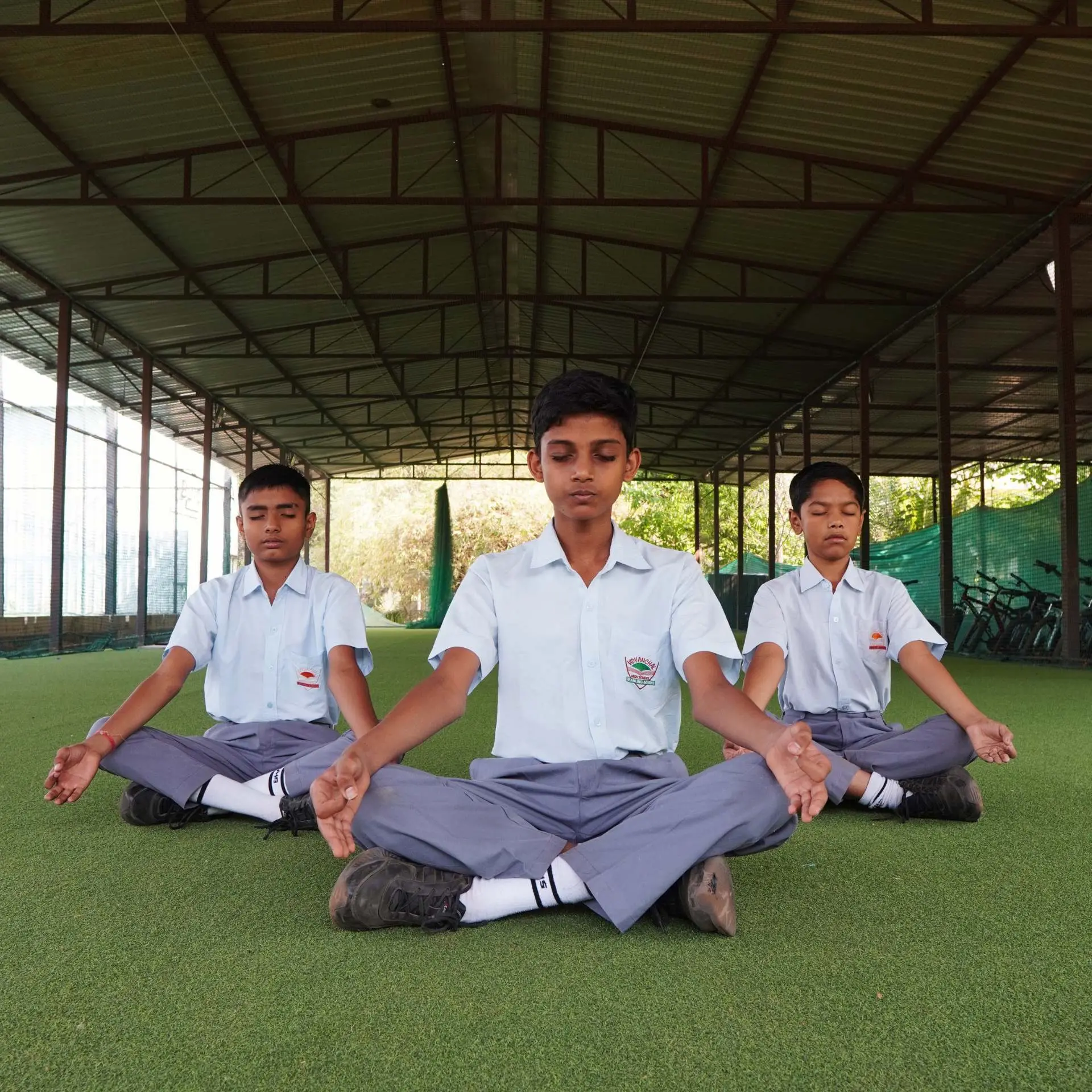
Mindfulness for kids is becoming increasingly important in a world where children are exposed to constant stimulation, busy schedules, academic expectations, social pressures, and digital distractions. While childhood should be a time of curiosity and exploration, many parents notice that children today often struggle with frustration, anxiety, restlessness, and difficulty regulating emotions.
The good news is that children do not need long meditation sessions or complicated techniques to feel calmer. Research in child psychology shows that even short mindfulness activities can help improve emotional regulation, focus, self-awareness, and stress management. Just five minutes a day can help children pause, reset, and respond to situations more calmly.
At Vidyanchal High School, holistic education extends beyond academics to include emotional well-being, confidence, and self-management skills that help children thrive both inside and outside the classroom.
What Is Mindfulness for Kids?
Mindfulness simply means paying attention to the present moment without judgment. For children, this can involve noticing:
- Their breathing
- Their thoughts
- Their emotions
- Sounds around them
- Physical sensations in their bodies
Research in education and child development suggests that mindfulness practices can help children improve attention, reduce stress, and develop stronger emotional control. Studies have also linked mindfulness-based activities with better classroom behaviour and improved focus.
The goal is not to eliminate emotions but to help children understand and manage them more effectively.
Why Children Need Calm-Down Strategies Today
Many children experience moments of overwhelm during daily life.
Common triggers include:
- Homework challenges
- Friendship conflicts
- School transitions
- Sports competition
- Excessive screen time
- Busy schedules
Psychologists note that children often react before they fully understand what they are feeling. Simple mindfulness routines help create a pause between emotion and reaction.
Children who learn calming techniques early often become better at:
- Managing frustration
- Handling disappointment
- Staying focused
- Communicating feelings clearly
- Recovering from stressful situations
These skills support both academic success and healthy relationships.
1. Balloon Breathing
One of the easiest mindfulness exercises for children is balloon breathing.
How to Practice:
Ask your child to imagine their stomach is a balloon.
- Breathe in slowly through the nose
- Let the “balloon” expand
- Breathe out slowly through the mouth
- Let the balloon deflate
Repeat for 5 deep breaths.
Why It Works:
Deep breathing activates the body’s relaxation response, helping slow the heart rate and reduce feelings of stress.
For younger children, visualising a balloon makes the exercise fun and easy to understand.
2. The Five Senses Reset
When children feel overwhelmed, helping them focus on their senses can bring them back to the present moment.
Ask them to identify:
- 5 things they can see
- 4 things they can touch
- 3 things they can hear
- 2 things they can smell
- 1 thing they can taste
Benefits:
This simple exercise helps children:
- Reduce anxious thoughts
- Improve awareness
- Shift focus away from worries
It is particularly useful before exams, presentations, or stressful situations.
At Vidyanchal High School (VHS), helping children become aware of their emotions and surroundings supports the broader goal of developing confident, resilient learners.
Every school is guided by values that shape how children learn and grow.
Learn more about the philosophy behind Vidyanchal High School.
3. The One-Minute Listening Challenge
Children are often surrounded by noise, but rarely asked to listen intentionally.
How to Play:
Set a timer for one minute.
Ask children to:
- Sit comfortably
- Close their eyes if they wish
- Listen carefully to every sound around them
Afterward, ask:
- What sounds did you hear?
- Which sound was closest?
- Which was farthest away?
Why It Works:
Listening exercises improve:
- Attention span
- Focus
- Patience
- Awareness
This activity is especially useful before homework or study sessions.
4. Calm-Down Stretch Routine
Physical movement and mindfulness work very well together.
A simple 5-minute sequence can include:
- Reach for the sky
- Touch your toes
- Stretch side to side
- Roll shoulders slowly
- Deep breathing between movements
Research suggests that combining movement with mindful breathing can help children regulate emotions and improve concentration.
This routine works well:
- Before school
- After school
- Before homework
- Before bedtime
Curiosity, confidence, and self-awareness begin in the earliest years.
See how Vidyanchal High School nurtures joyful learning in Pre-Primary.
5. Gratitude Minute
Gratitude is a simple mindfulness practice that encourages positive thinking.
Ask children to name:
- One thing they enjoyed today
- One person they appreciate
- One thing they are looking forward to
Benefits:
Studies in positive psychology suggest gratitude practices can improve:
- Emotional well-being
- Optimism
- Resilience
- Social relationships
Children learn to focus not only on challenges but also on positive experiences.
How Mindfulness Supports Learning
Mindfulness is not only about feeling calm. It can also support academic growth.
Research has found that mindfulness practices may help improve:
- Attention and concentration
- Working memory
- Emotional regulation
- Classroom behaviour
When children feel calmer, they often find it easier to:
- Listen to instructions
- Complete assignments
- Participate in discussions
- Solve problems effectively
This is one reason why many schools worldwide are incorporating age-appropriate mindfulness activities into student routines.
Making Mindfulness a Daily Habit
Mindfulness works best when it becomes part of everyday life rather than something used only during stressful moments.
Parents can introduce:
- Two minutes of breathing before school
- A gratitude conversation at dinner
- A listening challenge before homework
- Gentle stretching before bed
Consistency matters more than duration.
Even five minutes a day can create meaningful long-term benefits.
Common Mistakes Parents Should Avoid
Expecting Immediate Results
Mindfulness is a skill that develops over time.
Forcing Participation
Children respond better when activities feel supportive rather than mandatory.
Treating It Like Discipline
Mindfulness should feel calming, not corrective.
Making It Too Complicated
Simple routines are often the most effective.
Why Emotional Skills Matter as Much as Academic Skills
Children today need more than strong academic knowledge. They also need:
- Emotional awareness
- Resilience
- Self-confidence
- Healthy coping strategies
Mindfulness helps build these life skills gradually and naturally.
At Vidyanchal High School, education is viewed as a combination of academic achievement, personal growth, and emotional well-being. Supporting children emotionally helps them become stronger learners and more confident individuals.
The secondary years bring new challenges, responsibilities, and opportunities for growth.
See how Vidyanchal High School supports students through Secondary education.
Final Thoughts
Mindfulness for kids does not require special equipment, lengthy sessions, or expert training. Simple practices like balloon breathing, gratitude exercises, listening challenges, and mindful movement can help children feel calmer, more focused, and better equipped to manage everyday challenges.
In a world filled with distractions and constant stimulation, five minutes of mindfulness can provide children with valuable tools for emotional balance and self-awareness.
At Vidyanchal High School, nurturing confident, thoughtful, and emotionally resilient learners is an important part of holistic education. When children learn how to pause, breathe, and understand their emotions, they develop skills that support them not just in school—but throughout life.
FAQs
1. What is mindfulness for kids?
Mindfulness helps children pay attention to the present moment and become more aware of their thoughts, feelings, and surroundings.
2. How long should mindfulness activities last?
Even 3–5 minutes daily can be beneficial for most children.
3. At what age can children start mindfulness exercises?
Simple mindfulness activities can be introduced as early as preschool age.
4. Can mindfulness help with focus and concentration?
Yes. Research suggests mindfulness can support attention, emotional regulation, and learning readiness.
5. Should mindfulness replace other activities?
No. Mindfulness works best alongside healthy routines, physical activity, good sleep, and balanced learning experiences.