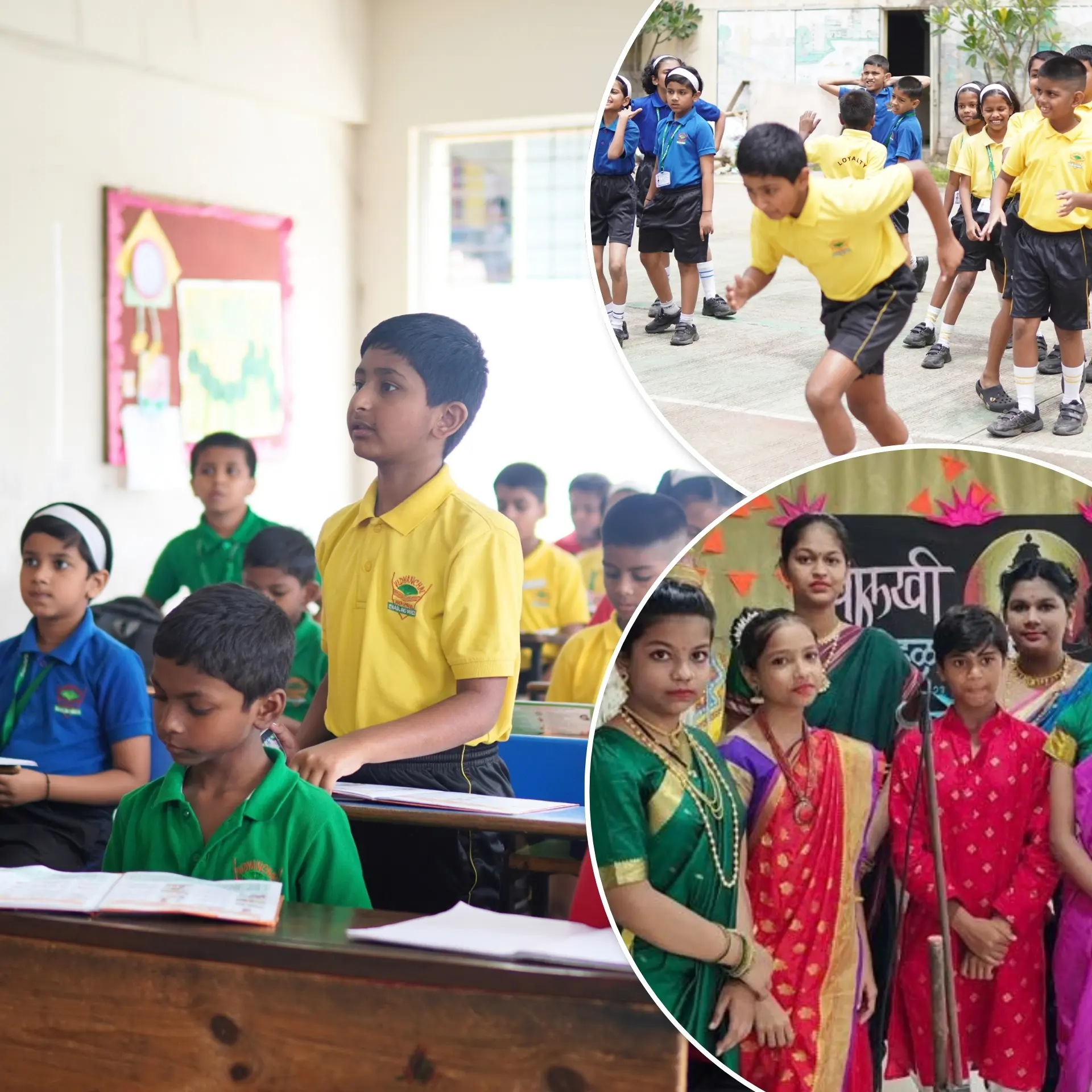
Sports, arts and academics are sometimes treated as three separate parts of school life: academics are considered “serious learning,” sports are associated with physical development, and arts are often viewed as extracurricular interests. But a child’s development does not happen in separate compartments. The skills developed through one area can strengthen learning and confidence in another.
A child solving a mathematics problem, practising a football drill, performing on stage, painting a picture, or participating in a group project is developing different abilities—but often with the same underlying goal: becoming more capable, curious, confident, and adaptable.
Modern educational thinking increasingly recognises this interconnected approach. In 2026, UNESCO reported findings from an India-focused study involving more than 2,000 learners across eight states, with regular sport and physical activity associated with physical, mental and emotional well-being, classroom engagement, and transferable skills.
At Vidyanchal High School, this idea forms an important part of holistic education: academics provide the foundation for knowledge, while sports and arts create opportunities to apply, express, and develop that knowledge in different ways.
Why Children Need More Than Academic Achievement
Academic knowledge is essential. Children need strong foundations in language, mathematics, science, social studies, and other subjects. But academic achievement alone does not develop every skill a child needs.
Children also need to learn how to:
- Work with others
- Express themselves
- Handle success and failure
- Solve unfamiliar problems
- Communicate confidently
- Stay physically active
- Manage emotions
- Take responsibility
These abilities develop through different experiences.
Sports may teach perseverance.
Arts may develop expression.
Academics may develop reasoning.
Together, they create a much broader learning experience.
Academics Build the Foundation
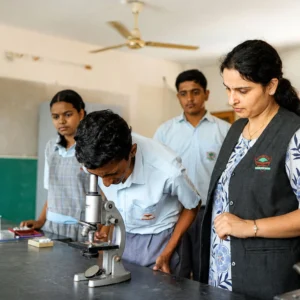
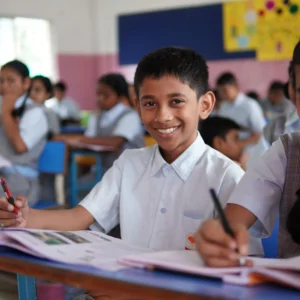
Academic learning gives children the knowledge and thinking skills they need to understand the world.
Through classroom learning, students develop:
- Reading and communication
- Mathematical reasoning
- Scientific thinking
- Research skills
- Memory and comprehension
- Critical thinking
But knowledge becomes more meaningful when children have opportunities to use it.
A science lesson can become an experiment. A mathematics concept can appear in a sports statistic. A history topic can inspire an art project or theatrical performance.
This is where different areas of school life begin to complement one another.
At Vidyanchal High School (VHS), learning is designed to encourage students to understand concepts while developing curiosity and the confidence to explore them.
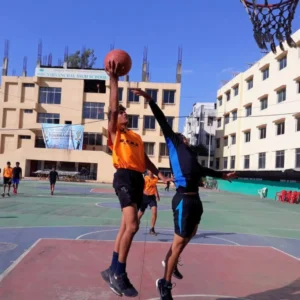
Sports Teach Lessons That Textbooks Cannot
Sports are often described primarily in terms of physical fitness, but their educational value goes much further.
A child playing a team sport learns to:
- Communicate
- Make decisions quickly
- Follow rules
- Handle pressure
- Cooperate with teammates
- Respond to setbacks
A systematic review published through the CDC found that research generally supports positive associations between physical activity, fitness, and children’s cognitive functioning, although the evidence linking physical activity directly to academic achievement is more mixed. Importantly, the review found no indication that increased physical activity harms academic performance.
That distinction matters. Sports should not be sold simply as a shortcut to higher marks. Their value is broader: they support healthy development, cognition, behaviour, confidence, and physical well-being.
Every school has a philosophy that shapes how children learn and grow.
Learn more about the values and vision guiding Vidyanchal High School.
Arts Give Children a Different Language
Not every child expresses themselves best through written answers.
Some children communicate through:
- Drawing
- Music
- Dance
- Theatre
- Craft
- Storytelling
Arts provide children with opportunities to experiment, interpret, create, and communicate.
UNESCO’s work on arts-based social and emotional learning in India highlights three particularly relevant areas: developing a sense of competence, building meaningful connections with peers and mentors, and developing an authentic voice.
These are not merely “creative extras.” They are important developmental skills.
A child who learns to stand confidently on stage may become more comfortable giving a classroom presentation. A child who learns to accept constructive feedback on artwork may become more comfortable revising written work.
See how Vidyanchal High School nurtures curiosity and expression in Pre-Primary.
The Three Areas Strengthen Each Other
The strongest argument for combining sports, arts and academics is that they do not operate independently.
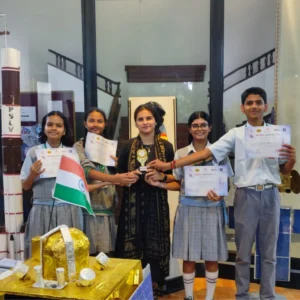
Consider a school science exhibition.
Students need academic knowledge to understand their topic.
They may need artistic skills to design their display.
They may need communication skills to present it.
They may need teamwork to work with classmates.
They may need confidence to answer questions.
Similarly, preparing for a sports event can involve mathematics through scores and statistics, communication through teamwork, and discipline through regular practice.
The boundaries between subjects and activities become less important when children start seeing learning as one connected experience.
Confidence Develops in Different Arenas
One of the biggest benefits of a balanced school environment is that children get multiple opportunities to experience success.
A student who struggles with mathematics may excel at football.
Another may find academics easy but discover confidence through theatre.
Someone else may be average in traditional classroom assessments but exceptionally creative in art or music.
These experiences matter because children begin to understand that their identity is not defined by a single report card.
At Vidyanchal High School, giving students opportunities across academic, sporting, cultural, and creative activities allows them to discover strengths that may not always be visible inside a conventional classroom.
Participation Builds Belonging
Sports teams, cultural performances, exhibitions, assemblies, and school events also create communities.
Children learn:
- “I have a role here.”
- “My contribution matters.”
- “I am part of this team.”
- “Other people are depending on me.”
This sense of belonging is important for school engagement. Research consistently associates school belonging with stronger social and academic engagement.
A school therefore becomes more than a place where children attend classes. It becomes a community in which they participate.
Why Schools Should Avoid an “Academics First, Everything Else Later” Approach
A common mistake is to remove sports, arts, or activities whenever academic pressure increases.
The intention is understandable: parents want children to perform well.
But a completely academic routine can leave children with fewer opportunities for movement, creativity, social interaction, and emotional release.
The evidence around physical activity and academic outcomes is not as simple as saying “more sport equals better marks.” However, research does indicate that physical activity supports cognitive function and does not need to be treated as the enemy of academic learning.
The better question is not:
“Sports or studies?”
It is:
“How can sports and studies support the same child?”
The Role of Teachers and Parents
A balanced approach requires adults to value different forms of achievement.
Parents can encourage children by asking:
- What did you learn today?
- What did you enjoy?
- What did you create?
- What did you practise?
- What challenge did you overcome?
Teachers can similarly recognise effort across different areas.
A child winning a competition, completing a difficult project, performing on stage, helping a teammate, or finally understanding a challenging concept can all represent meaningful progress.
What a Balanced School Environment Looks Like
Parents evaluating schools should look for evidence that the three areas genuinely coexist.
Ask:
- Are sports part of the regular school experience?
- Are arts and cultural activities accessible to students?
- Are academic concepts connected to practical experiences?
- Do students get opportunities to perform and present?
- Are competitions focused on participation as well as achievement?
- Does the timetable leave room for physical and creative development?
The important factor is not how many activities appear in a brochure. It is whether students actually participate in them.
Explore the events that bring the Vidyanchal High School community together.
The Vidyanchal Way: Developing the Whole Child
At Vidyanchal High School, academics, sports, arts, activities, and student experiences are viewed as complementary parts of a child’s development.
Academic learning builds knowledge.
Sports build discipline, teamwork, and resilience.
Arts encourage creativity, expression, and confidence.
Together, they help children develop into individuals who can think, communicate, collaborate, create, and adapt.
That is ultimately what holistic education should accomplish.
Final Thoughts
Sports, arts and academics should work together in school life because children are more than their examination scores. They are developing minds, bodies, personalities, interests, relationships, and identities all at once.
A strong school environment gives them different ways to learn and different opportunities to succeed.
Research supports the value of physical activity for cognition and well-being, while arts-based experiences can strengthen expression, connection, and a sense of competence.
At Vidyanchal High School, holistic education means giving students opportunities to learn through the classroom, the playground, the stage, the studio, and the wider school community.
Because the goal of education is not simply to produce children who can answer questions correctly. It is to help them become confident enough to ask better questions, creative enough to explore possibilities, and resilient enough to keep learning.
FAQs
1. Why should schools balance academics with sports and arts?
A balanced approach supports academic learning while also developing confidence, creativity, teamwork, communication, and resilience.
2. Can sports actually support learning?
Research suggests physical activity can positively influence cognitive functioning, although its direct effect on academic marks is more mixed.
3. How do arts benefit children?
Arts provide opportunities to develop creativity, self-expression, confidence, communication, and meaningful connections.
4. Should academics always take priority over extracurricular activities?
Children need academic foundations, but removing sports and arts entirely can reduce opportunities for physical, creative, and social development.
5. How does Vidyanchal High School support holistic development?
Vidyanchal High School brings academics, sports, arts, activities, and student experiences together to support the development of confident and well-rounded learners.