Positive morning routine for school days can make a significant difference to how children begin their day. Rushed mornings, forgotten homework, unfinished breakfasts, and repeated parental reminders can create stress before school has even started.
A simple, predictable routine helps children become more organised, independent, and prepared for learning. For families in Pune, where school commutes and morning traffic can add pressure, a structured routine can make everyday school life considerably smoother.
At Vidyanchal High School, holistic education includes helping children develop confidence, responsibility, self-management, and healthy habits that extend beyond academics.
Why Morning Routines Matter
Children benefit from knowing what happens next. A consistent morning routine can help them:
- Transition comfortably from sleep to school
- Develop independence
- Reduce morning stress
- Improve time-management skills
- Arrive at school prepared
- Start the day with greater confidence
Instead of parents repeatedly saying, “Wake up,” “Get dressed,” or “Pack your bag,” children can gradually learn to follow a sequence independently.
Looking for a school that develops confidence and independence alongside academics?
Discover the holistic learning environment at Vidyanchal High School.
Start the Night Before
A successful school morning actually begins the previous evening.
Children can prepare:
- School uniform
- Shoes and socks
- School bag
- Homework
- Water bottle
- Lunchbox
- Sports equipment
Younger children may need help, while older children can gradually take complete responsibility.
This simple habit reduces morning decisions and teaches children an important lesson: preparation makes routines easier.
At Vidyanchal High School (VHS), developing responsibility and independence is an important part of helping students become capable learners.
Prioritise Sleep
No morning routine can compensate for insufficient sleep.
Recommended sleep durations generally include:
- 3–5 years: 10–13 hours
- 6–12 years: 9–12 hours
- 13–18 years: 8–10 hours
Adequate sleep supports attention, memory, emotional regulation, and learning readiness.
Children who regularly struggle to wake up may need an earlier bedtime rather than simply more morning reminders. Maintaining consistent sleep and wake times can make school mornings considerably easier.
Explore how Vidyanchal High School supports children during Pre-Primary.
Give the Morning Enough Time
Avoid scheduling the morning down to the last minute.
If a child needs to leave at 7:30 AM, waking them shortly before 7:00 may leave no room for unexpected delays. A 15–20-minute buffer can accommodate a slower breakfast, missing stationery, or last-minute preparation.
The goal is not to make children move faster. It is to create a routine where rushing is less necessary.
Use a Visual Checklist
Visual routines are particularly useful for younger children.
A simple checklist could include:
☐ Wake up
☐ Brush teeth
☐ Get dressed
☐ Eat breakfast
☐ Pack bag
☐ Fill water bottle
☐ Wear shoes
☐ Leave for school
This gradually shifts responsibility from parent to child.
Instead of asking, “Did you pack your bag?”, parents can ask, “What’s next on your checklist?”
Don’t Skip Breakfast
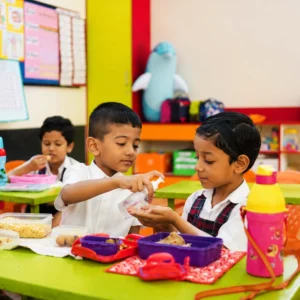
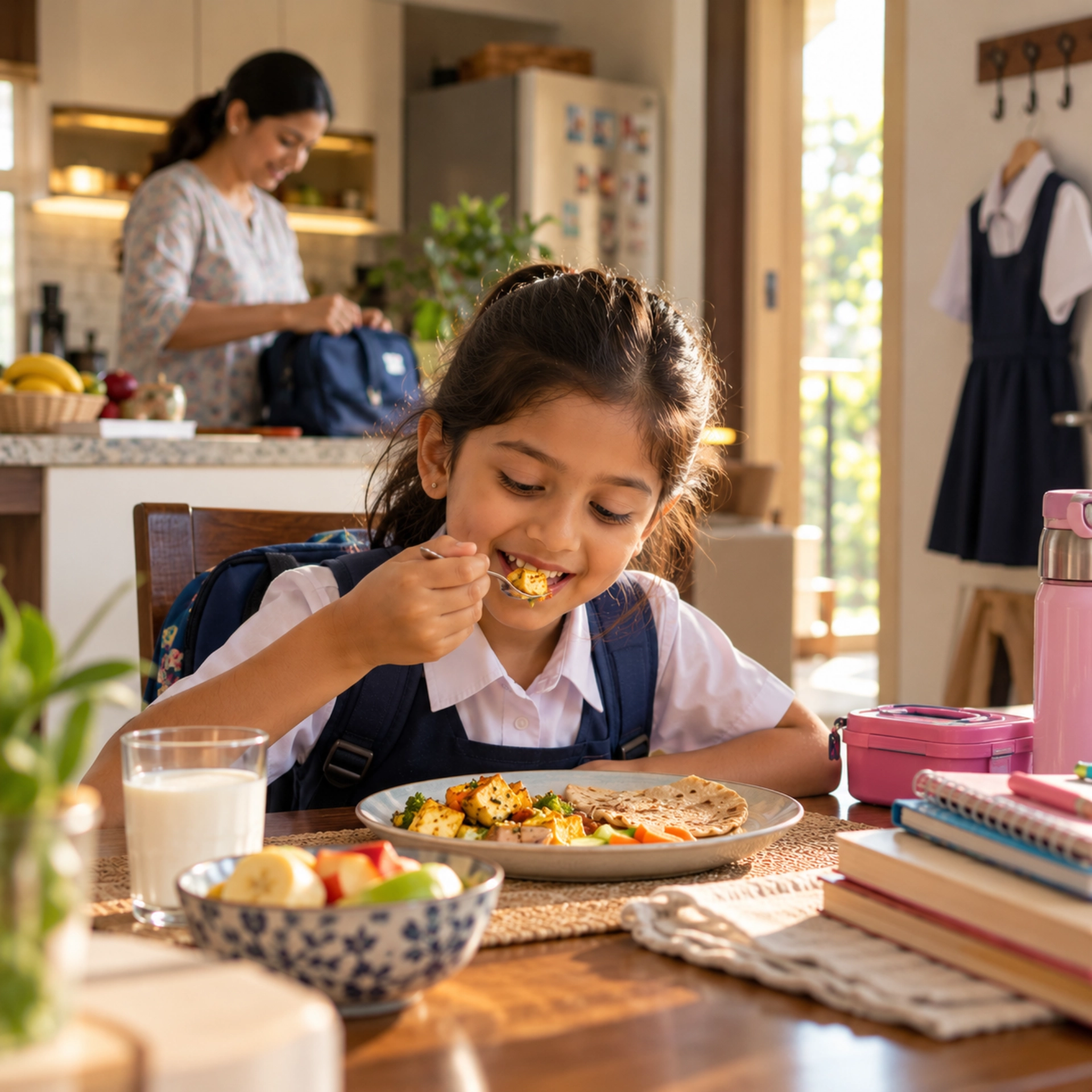
A nutritious breakfast gives children an opportunity to begin the day with energy and hydration.
Simple options can include fruit, whole grains, eggs, milk or yoghurt, and other nutritious foods suited to the child’s dietary needs.
Preparing breakfast ingredients the previous evening can also save valuable time.
Keep Screens Out of the Morning
Screens can easily disrupt a morning routine. A child watching videos during breakfast may find it difficult to stop when it is time to leave.
Creating a screen-free morning window leaves more room for:
- Conversation
- Breakfast
- Getting ready
- Quiet preparation
- Family interaction
Technology does not need to be eliminated. It simply needs boundaries.
Give Children Small Responsibilities
Children become independent by practising independence.
Depending on age, responsibilities can include:
Younger children: putting away belongings and choosing between two outfits.
Primary students: packing their school bag and checking homework.
Older students: checking their timetable, organising materials, and preparing their bag independently.
The responsibility should increase gradually as children grow.
Use Positive Language
Morning conversations can influence the atmosphere of the entire household.
Instead of:
“You’re always late!”
Try:
“We have 15 minutes. What do you need to finish?”
Useful prompts include:
- “What’s next?”
- “What can you prepare tonight?”
- “Do you need help?”
- “Can you do this yourself?”
This teaches children to think about time and responsibility rather than simply responding to instructions.
A Simple Morning Structure
Every family will have different timings, but the sequence can remain consistent:
Wake up → Freshen up → Get dressed → Breakfast → Brush teeth → Check bag → Shoes → Leave
The exact clock time matters less than creating a predictable sequence.
The Goal Is Independence, Not Speed
A successful morning routine is not about getting children ready as quickly as possible.
It teaches them to ask:
What do I need to do?
What do I need to prepare?
How much time do I have?
What can I manage myself?
These habits become increasingly valuable as children progress through school.
At Vidyanchal High School, this emphasis on responsibility, confidence, and independence complements the school’s broader approach to holistic education.
School life extends beyond academics into activities, celebrations and shared experiences.
Explore the events and activities at Vidyanchal High School.
Final Thoughts
A positive morning routine for school days does not require a complicated schedule. Adequate sleep, preparation the night before, a consistent sequence, breakfast, limited morning screen time, and age-appropriate responsibilities can transform stressful mornings into calmer ones.
The ultimate goal is not to make children dependent on a perfect routine. It is to teach them how to organise themselves.
At Vidyanchal High School, developing confident, responsible, and independent learners is an important part of holistic education—helping children build habits that support them both inside and outside the classroom.
FAQs
1. What should a school morning routine include?
Sleep, getting ready, breakfast, checking school essentials, and leaving with enough time.
2. How can parents make children more independent?
Use visual checklists and gradually give children responsibility for age-appropriate tasks.
3. Should children use screens before school?
A screen-free morning can reduce distractions and make transitions easier.
4. How much sleep do school-age children need?
Children aged 6–12 generally need 9–12 hours of sleep each night.
5. Why prepare the night before?
It reduces morning decisions, prevents last-minute searching, and creates a calmer start to the school day.