When parents compare schools, they often focus on curriculum, teachers, facilities and academic results. But there is another factor that can shape a child’s everyday school experience: the school commute. Research suggests that longer school travel times can be associated with lower psychological well-being and academic performance, making commute time an important factor when choosing a school.
For families looking at schools in Pune, this becomes especially relevant. A school may offer excellent opportunities, but if reaching it requires a long and stressful journey every morning and afternoon, children may have less energy and time for learning, play, rest and family life.
The Commute Is Part of the School Day
A child’s school day does not begin when they walk through the school gate. It begins much earlier.
A long commute can mean waking up earlier, spending more time in traffic and arriving at school already feeling tired or rushed. The same happens at the end of the day. After several hours of classes and activities, another lengthy journey can leave children with less energy for homework, hobbies, outdoor play and family interaction.
Research examining school travel among children in China found a significant negative association between longer commute times and both psychological well-being and academic achievement. One analysis found that every additional 10 minutes of one-way commuting was associated with a measurable decline in psychological well-being and academic performance.
This does not mean that every child with a longer commute will struggle. However, it shows why travel time deserves more attention when parents evaluate schools.
A Better School Day Starts Before the First Period
The best school environment supports children throughout their daily routine, including how they get there and return home.
Shorter Commutes Can Mean More Energy for Learning
Concentration requires mental energy. Children who spend a large part of their day travelling may have less time and energy available for other activities.
A nationwide study of nearly 7,500 teenagers in China found that long school commutes were associated with lower self-reported physical and mental health, lower grades and cognitive performance, as well as reduced time for activities such as sleeping. The study defined a long commute as at least 20 minutes one way.
The important point is not that 20 minutes is a universal cut-off for every child. Age, traffic, transport mode, school timings and individual temperament all matter. Instead, the research highlights a broader principle: as travel becomes longer, it can begin taking time and energy away from other parts of a child’s day.
For younger children especially, maintaining a predictable rhythm between home, school, play and rest can make everyday routines easier to manage.
Less Travel Stress Can Support Better Mornings
Morning routines can influence how children enter the school day.
A rushed morning involving traffic delays, late arrivals or a long journey can create unnecessary stress before classes even begin. In contrast, a manageable commute gives families more flexibility and children a greater chance of arriving calmly and prepared.
This is particularly important in a city such as Pune, where daily traffic conditions can make travel times unpredictable.
For parents, choosing a school closer to home does not simply mean saving fuel or reducing driving time. It can mean creating a more predictable daily routine for the entire family.
Choosing a School That Fits Into Your Family’s Daily Life
A good school should work not only academically, but also practically. Explore the learning environment at Vidyanchal High School.
A Short Commute Can Give Children More Time Outside School
One of the biggest advantages of reducing travel time is something very simple: getting time back.
The extra time can be used for:
- Outdoor play
- Reading
- Music and creative activities
- Homework without rushing
- Family conversations
- Adequate sleep
- Hobbies and personal interests
This matters because childhood development does not happen only inside classrooms.
Research on school travel has also explored the relationship between active commuting, well-being and school experiences. A study involving more than 34,000 Finnish adolescents found that active school transport was positively associated with educational outcomes and school enjoyment, although leisure-time physical activity showed even stronger associations with these outcomes.
The takeaway for parents is not that every child needs to walk or cycle to school. Safety, distance, weather and local infrastructure must always be considered. Rather, children benefit when their overall daily schedule leaves enough room for movement, recreation and recovery.
The Right School Is Also About Accessibility
Parents often ask whether a school has the right curriculum, teaching approach, infrastructure and activities. They should also ask:
Can my child comfortably manage the journey every day?
Consider:
- How long is the usual one-way journey?
- How predictable is the travel time?
- Does traffic regularly cause delays?
- What time would the child need to wake up?
- What time would they return home?
- Would the commute reduce time for sleep or activities?
- How manageable will the journey become as the child grows older?
These questions can reveal whether a school is genuinely practical for the family.
The Early Years Need Predictability
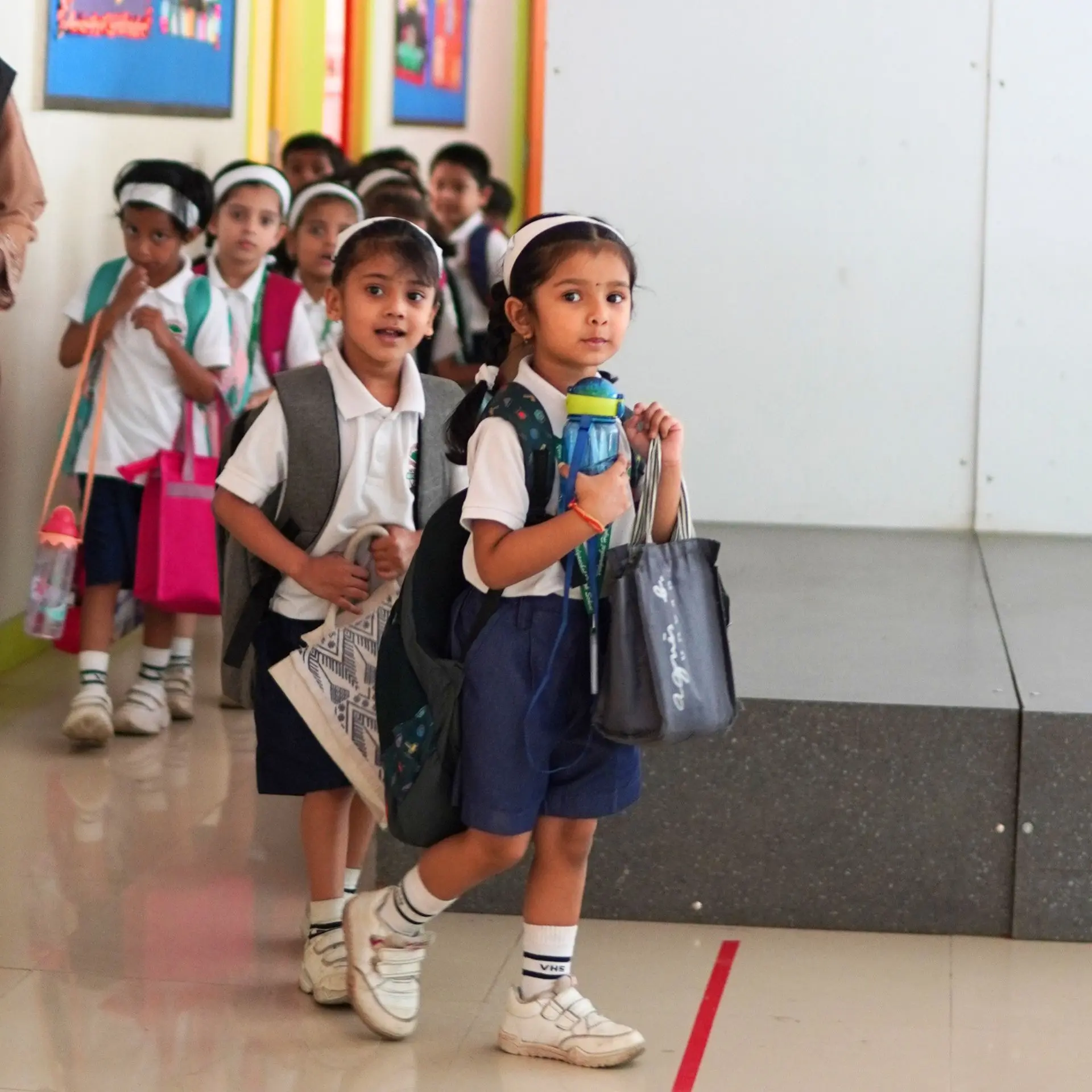
Young children benefit from routines that make the day feel familiar and manageable. Explore the Pre-Primary learning environment at Vidyanchal High School.
Location Can Influence the Quality of Everyday School Life
Choosing a school is a long-term decision. Children may spend several years travelling to and from the same campus, which means even a seemingly small daily difference can become significant over time.
Suppose one school requires an additional 20 minutes of travel each way. That is 40 extra minutes every school day. Across five days, that becomes more than three hours of additional travel each week.
That time could instead become part of a child’s sleep, reading, play, family interaction or simply unstructured downtime.
This is why proximity should not automatically be treated as a compromise. A school that combines strong academics, holistic development and reasonable accessibility can make the entire school routine more sustainable.
Strong Foundations Should Leave Room to Grow
As children move into Primary education, their schedules become more independent. Explore how Vidyanchal High School supports learning during these important years.
What Parents Should Look For
When shortlisting schools in Pune, consider the complete daily experience rather than evaluating the campus in isolation.
A useful checklist includes:
- Academic approach
- Teacher-student relationships
- Learning resources
- Sports and extracurricular opportunities
- Student well-being
- Communication with parents
- Campus facilities
- Safety and accessibility
- Daily commute time
- The child’s overall comfort with the routine
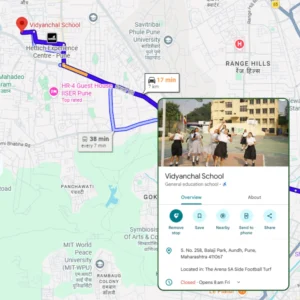
For families in and around Aundh-Baner, accessibility can therefore become an important part of school selection.
Vidyanchal High School offers education from Pre-Primary through Secondary levels, allowing families to consider a school environment that can support children across different stages of their development.
A Happier School Routine Starts With the Whole Picture
Choosing the right school is about much more than what happens inside the classroom. Children need time to learn, but they also need time to sleep, play, explore, spend time with family and simply be children.
Research increasingly highlights the relationship between school travel time, well-being and academic outcomes. It does not suggest that a particular number of minutes guarantees happiness or better grades. Instead, it reinforces a practical message for parents: a manageable school commute can help create a more balanced and sustainable daily routine.
When comparing schools, therefore, look beyond the classroom and consider the journey too. The right learning environment should not only help children learn better. It should leave them with enough time and energy to enjoy growing up.
Secondary Years Should Build Independence
As children become older, managing time, responsibilities and school routines becomes increasingly important. Explore Secondary education at Vidyanchal High School.
School Life Extends Beyond the Classroom
From celebrations and competitions to performances and shared experiences, school memories are built throughout the year. Explore the events and activities at Vidyanchal High School.
FAQs
1. Does a shorter school commute improve academic performance?
Research has found associations between longer school commutes and lower academic performance, although commute time is only one of many factors affecting learning.
2. What is considered a long school commute?
There is no universal limit. The ideal journey depends on the child, location, transport and daily schedule. The key is whether travel leaves enough time for sleep, learning and recreation.
3. Should parents choose the closest school?
Not necessarily. Parents should consider commute time alongside teaching quality, curriculum, facilities, activities, safety and the overall learning environment.
4. Can commuting affect a child’s mood?
Research suggests that longer school travel can be associated with lower psychological well-being. A predictable and manageable daily journey may help reduce unnecessary stress.
5. Why is school location important in Pune?
Traffic and travel times can vary significantly across Pune. A conveniently located school can make daily routines more predictable and leave children with more time for rest, play and family life.