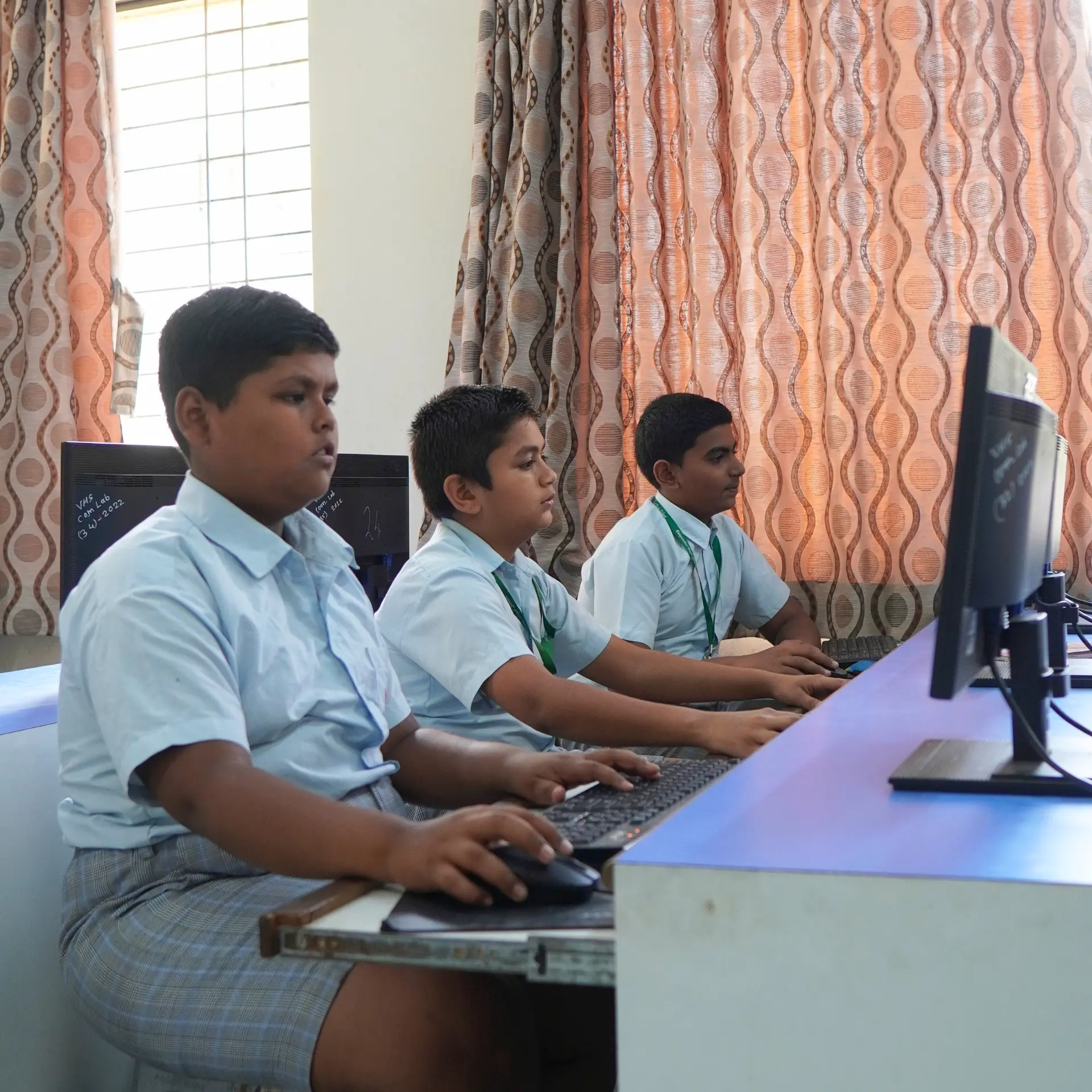
Cyber experts agree that digital safety education must begin early—as soon as children start exploring the internet independently. According to India’s National Cyber Crime Reporting Portal, cases involving online harassment of minors increased by over 400% between 2019 and 2023.
Early education can make a crucial difference:
- Children who receive cyber awareness lessons are 60% less likely to share personal information online (Norton Family Study, 2023).
- Schools that conduct regular digital literacy sessions report 40% fewer incidents of cyberbullying among students (Microsoft Digital Civility Index).
By building these skills early, schools empower students to make safe decisions and respond responsibly when they face challenges online.
VHS’s Approach: Safe, Smart, and Kind
At Vidyanchal, the goal isn’t to ban or restrict technology—it’s to humanise it. The school’s digital literacy initiatives blend emotional intelligence with responsible use.
1. Teaching Safe Practices
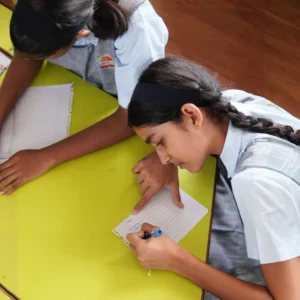
From a young age, VHS students are guided on the basics of digital safety—creating strong passwords, avoiding oversharing, and understanding privacy settings. Through age-appropriate lessons, they learn about online boundaries, the importance of critical thinking before clicking, and how to spot suspicious behaviour or misinformation.
Teachers also collaborate with parents through interactive workshops, ensuring that the message of digital safety is reinforced consistently both at school and at home.
2. Promoting Smart Decision-Making
VHS believes digital intelligence is a key skill for 21st-century learners. Students are encouraged to question sources, verify facts, and understand digital footprints—the trail of information every online action leaves behind.
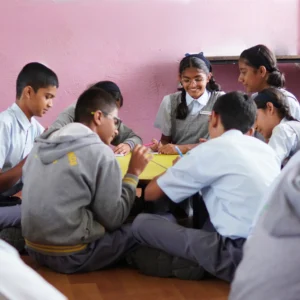
Through project-based learning, they engage with real-world topics like data privacy, responsible posting, and how algorithms influence what we see. By encouraging curiosity and caution together, VHS helps students become discerning digital citizens rather than passive consumers of information.
3. Building a Culture of Kindness Online
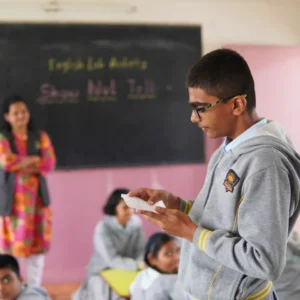
Empathy is at the heart of VHS’s philosophy. The school integrates discussions on digital empathy and kindness into its broader life-skills curriculum.
Students learn about the emotional impact of words and actions online, exploring how cyberbullying or trolling can harm real people behind screens.
This aligns with the school’s holistic approach—where sports, arts, and academics come together to nurture well-rounded, emotionally intelligent individuals. As students develop compassion and self-awareness offline, they naturally carry these values into their online interactions.
The Role of Parents in Raising Digital Citizens
In an age where even toddlers can unlock smartphones, parents play a critical role in shaping children’s digital habits. The challenge is striking the right balance—guidance without surveillance, freedom without fear.
Here are a few strategies encouraged by VHS educators:
- Co-view and co-learn: Watch or explore digital content together. This opens up conversations about what’s appropriate or misleading.
- Set family digital boundaries: Agree on screen-free zones (like the dining table) and screen-free times (like bedtime).
- Discuss, don’t dictate: Encourage children to talk about what they see online. A trusting relationship is far more effective than strict monitoring.
- Model mindful behaviour: Children often mirror adult habits. Limiting your own screen use sets a powerful example.
According to a Pew Research Center study, 72% of children whose parents discussed online behaviour with them said they felt “more confident and safe” using the internet. Open communication remains the most effective safeguard.
Merging Digital Literacy with Holistic Education
VHS’s focus on sports, arts, and academics provides a natural balance to students’ screen-heavy world. Outdoor activities teach teamwork and real-world social skills, while creative subjects like art and music help students express themselves beyond digital confines.
This balance is crucial. Studies show that children who engage in physical activity for at least one hour a day exhibit better focus and lower screen dependency (World Health Organization, 2022). By keeping both the mind and body active, VHS ensures students enjoy technology without being consumed by it.
Beyond Safety: Nurturing Digital Leaders
In 2025, being digitally safe isn’t enough—students must also learn to be digital leaders. VHS prepares its learners to use technology as a tool for problem-solving, creativity, and social good.
For instance, middle school projects often explore real issues like climate change awareness campaigns or digital inclusion for rural areas—showing students how to turn online tools into platforms for impact.
Such initiatives align with the National Education Policy (NEP) 2020, which emphasises digital literacy, ethical reasoning, and social responsibility as integral to modern learning.
The VHS Commitment
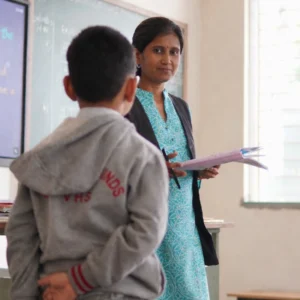
At Vidyanchal High School, technology is viewed not as a distraction but as a dimension of learning. Teachers are trained to integrate smart tools thoughtfully—combining innovation with ethics. Students are empowered to ask questions like:
- Is this information reliable?
- Could my comment hurt someone?
- How can I use this platform to make a difference?
By cultivating these habits early, VHS nurtures learners who are not only tech-savvy but also thoughtful, compassionate, and responsible digital citizens.
Final Thoughts
The internet is here to stay—and so is its influence on our children. The question isn’t whether to allow screen time, but how to shape it.
Through its holistic approach, Vidyanchal High School demonstrates that the key lies in balance: combining awareness with empathy, knowledge with values, and freedom with responsibility.
When children learn to be safe, smart, and kind online, they don’t just protect themselves—they help build a healthier, more compassionate digital world for everyone.